
Objective
This blog helps business owners, retail managers, and commercial property decision-makers understand what truly matters before investing in storefront glass. From glass types and safety codes to energy efficiency and installer selection, we cover every factor that protects your investment and strengthens your business presence.
Key Takeaways
- The right Storefront Glass directly impacts customer trust, foot traffic, and brand perception
- Commercial Storefront Glass comes in multiple types, and choosing the wrong one is an expensive mistake
- Safety compliance and local building codes are non-negotiable before any installation
- Glass Storefront Doors affect both daily operations and long-term security
- Professional installation quality determines how long your system actually performs
Introduction
Your storefront makes a promise to every customer walking by. The question is, what is your saying?
Most business owners focus on interior design, signage, and lighting. But here’s the thing: the glass on your front facade is doing the heaviest lifting before anyone even walks through the door. Storefront Glass is not just a structural element. It is your first handshake with every potential customer.
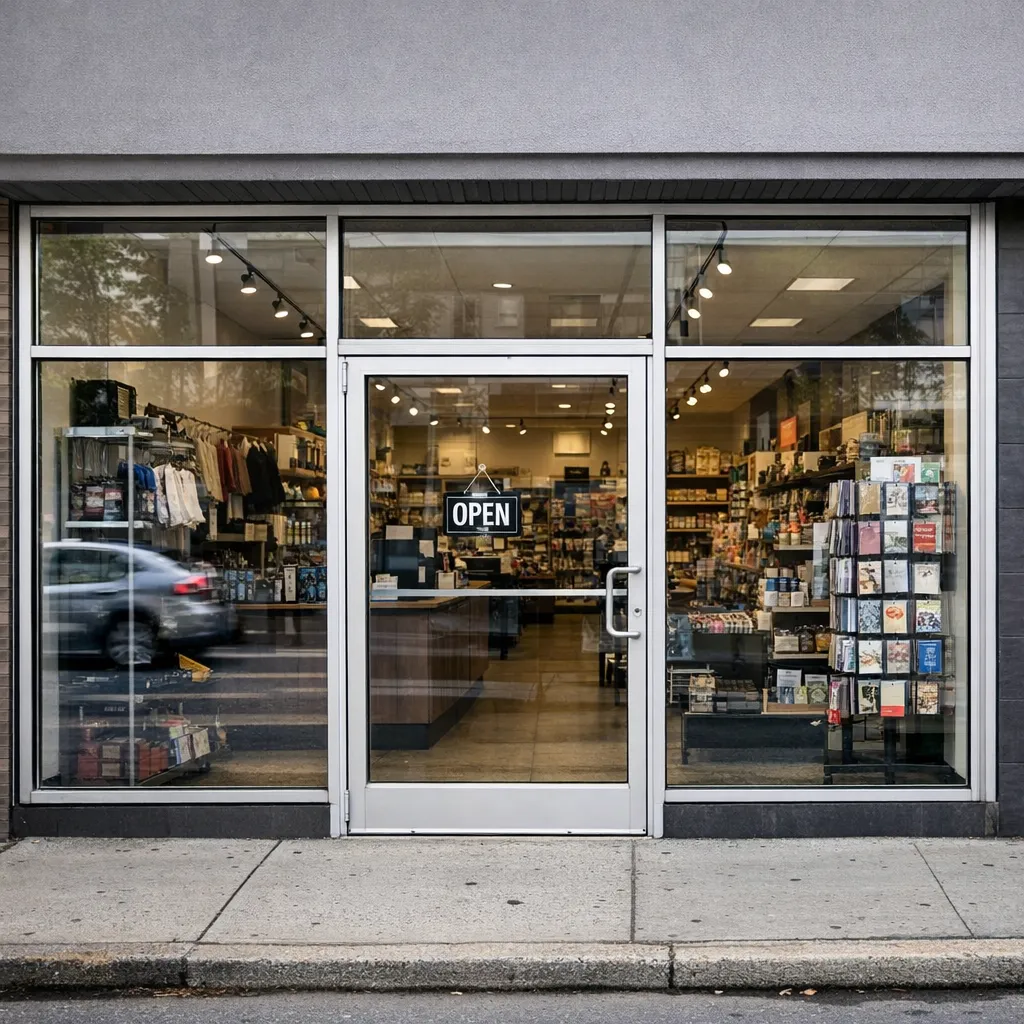
Did you know? According to the National Retail Federation, nearly 70% of purchasing decisions are influenced by a store’s exterior appearance. If you are planning a new installation or an upgrade, this guide walks you through every factor that actually matters before you spend a dollar.
Table of Contents
- Know Your Glass Types Before You Commit
- Safety Requirements You Cannot Skip
- How Your Door Choice Shapes Daily Business Flow
- Energy Efficiency: The Factor Most Owners Overlook
- Choosing the Right Installer
- FAQs
Know Your Glass Types Before You Commit
Not all glass is built the same, and in a commercial setting, that difference can cost you thousands. Let’s break it down so you can walk into any contractor conversation with confidence.
Tempered Glass: The Commercial Standard
Tempered glass is heat-treated to be four to five times stronger than regular glass. It shatters into small, blunt pieces rather than sharp shards, making it the go-to choice for most Commercial Storefront Glass installations in standard retail environments.
Laminated Glass: Built for High-Risk Locations
Laminated glass holds together on impact rather than falling apart. If your business sits on a busy street or in a storm-prone area, this gives you protection that tempered glass simply does not.
Insulated Glass Units: Smart for Energy Control
Insulated glass units use two panes with a sealed air gap between them. If your storefront gets direct sun for most of the day, this setup quietly reduces your cooling costs month after month.
| Glass Type | Best For | Key Benefit |
| Tempered Glass | Standard retail, offices | Safe breakage pattern |
| Laminated Glass | High-traffic, storm areas | Holds together on impact |
| Insulated Glass (IGU) | Sun-facing storefronts | Energy efficiency |
| Low-E Coated Glass | Year-round climate control | Reflects heat, admits light |
What this really means is: your location, climate, and foot traffic should drive your glass decision, not just your budget.
Safety Requirements You Cannot Skip
Safety compliance is not optional. Skipping it can cost you far more than the installation itself through fines, legal liability, or full teardowns.
In New Jersey, Commercial Storefront Glass installations require permits in most municipalities. Two key federal standards, ANSI Z97.1 and CPSC 16 CFR 1201, govern how glass must perform under impact. Your installation must meet both. Additionally, ADA compliance for entry doors covers minimum width, hardware height, and threshold limits. A non-compliant door is both a legal risk and a barrier to customers.
How Your Door Choice Shapes Daily Business Flow
Glass Storefront Doors are not an afterthought. They are a core part of your customer experience every single day.
Swing doors work well for smaller retail shops. Sliding doors suit high-traffic businesses where hands-free entry keeps things moving. Automatic doors deliver the best accessibility for medical offices or high-end retail.
If your current door glass is scratched, cracked, or foggy between panes, storefront door glass replacement is often more cost-effective than a full system overhaul. A qualified glazing contractor can assess exactly what needs to go and what can stay.
Energy Efficiency: The Factor Most Owners Overlook
Glass is one of the biggest drivers of heat gain and heat loss in a commercial building. Low-E coatings reflect infrared heat while letting in natural light, keeping your space cooler in summer and warmer in winter.
According to the U.S. Department of Energy, energy-efficient glazing can reduce heating and cooling loads by up to 30% in commercial storefronts. That adds up fast when you are paying commercial utility rates year-round.
Choosing the Right Installer
Even the best glass fails if the installation is poor. Before hiring anyone, confirm they carry proper licensing for commercial work in New Jersey, hold current liability insurance, and offer a clear warranty on both materials and labor.
Davila Glass & Mirror brings over 25 years of hands-on commercial experience in the Fair Lawn, NJ area. Every project starts with a thorough site assessment because no two locations are identical.
Questions to ask before you hire:
- Do you handle permits and inspections?
- Can you provide references from commercial clients?
- What does your warranty cover and for how long?
Your Storefront Deserves to Work as Hard as You Do
Rushing this decision almost always creates problems that cost more to fix than the initial savings were worth. Take time to evaluate glass types, confirm compliance, and hire someone who genuinely understands commercial glazing.
Davila Glass & Mirror manages everything from storefront door glass replacement to full commercial installations across Bergen County, including permits and compliance.
Frequently Asked Questions
Most commercial storefronts use tempered glass as it meets safety requirements and breaks safely. The units can also be laminated or insulated, based on the location’s security requirements.
Local labor rates and glass type determine costs. Low energy bills and fewer repairs are common benefits of higher-performance glass.
In most NJ municipalities, yes. Commercial glass replacement requires permits and inspections before work begins.
Storefront systems are ground-floor framed setups for retail and commercial entryways. Curtain wall systems span multiple floors and are used on larger buildings.
With professional installation and quality materials, a commercial storefront glass system can last 20 to 30 years or more with regular maintenance.
Call 551-326-3077 today for your free storefront glass consultation.
